
The latest fan of Gujarat Chief Minister Narendra Modi seems to be the American Samoan delegate, Eni Faleomavaega, the ranking Democrat on the house foreign affairs subcommittee on Asia and the Pacific, which has jurisdiction over matters pertaining to South Asia. Aziz Haniffa reports.


Indian envoy Vinay Mohan Kwatra discussed fair, balanced and mutually beneficial trade ties with US lawmakers amid ongoing tariff tensions between New Delhi and Washington.
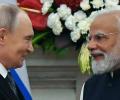
United States representative Sydney Kamlager-Dove while talking about the famous car selfie of Prime Minister Narendra Modi with Russian President Vladimir Putin said that it spoke a thousand words.
Frank J Cilluffo, director of the Homeland Security Policy Institute of George Washington University, has told the United States Congress that the endemic corruption found in every level on India's law enforcement apparatus is a major impediment to India-US counterterrorism cooperation. Cilluffo said despite the plethora of anti-terrorism initiatives between Washington and Delhi, as well as a host of other mechanisms for cooperation, "a trust deficit encompasses ties".
The Obama administration's point man for counterterrorism, Daniel Benjamin, has said that America's relationship with Pakistan "is very complex," even as Congress has said its patience with Islamabad "is wearing thin."
Congressman Ed Royce, an influential Republican lawmaker, has slammed Pakistan for not shutting down the Deobandi schools that indoctrinate and brainwash people to engage in jihad.
New York Democrat Gary Ackerman was arguably considered one of the most cerebral and strategic thinkers on foreign policy. He has been a regular visitor to India and a conspicuous presence at Indian American events and has a daughter-in-law who's Indian American too.
Lisa Curtis, erstwhile Central Intelligence Agency South Asia analyst and ex-senior Congressional staffer on the powerful Senate Foreign Relations Committee, has said that the arrest and findings from the investigation of Chicago-based Pakistani-American Lashkar-e-Tayiba operative John Coleman Headley, has awakened US officials to the gravity of the threat of the LeT and other Pakistan-based terrorist groups.
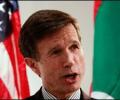
In perhaps what could be his swansong appearance as the Obama administration's point man for South Asia, Robert Blake has acknowledged that the impasse over the implementation of the US-India civilian nuclear deal poses many challenges to Washington and New Delhi.
The only Indian American lawmaker in the United States Congress, Dr Amerish 'Ami' Bera, on Tuesday made his debut as a member of a Congressional Committee that has jurisdiction over matters pertaining to South Asia.
Former Assistant Secretary of State for South Asian Affairs, Karl F Inderfurth, has told the US Congress that Washington should publicly support India's bid for a permanent seat in the UN Security Council, arguing that the India's case has never been stronger.
A senior Pentagon official has told the United States Congress that in spite of the threat posed by the Al Qaeda, the Taliban and other militant groups, the Pakistani military still views India as its greatest security threat.
An influential US lawmaker, who heads the Congressional Committee that has jurisdiction over matters pertaining to the subcontinent, has warned that South Asia poses the greatest terrorist threat to the United States. Congressman Gary L Ackerman, New York Democrat, chairman of the House Foreign Affairs Subcommittee on the Middle East and South Asia, declared, "South Asia is arguably the place from which America faces the greatest terrorist threat."
United States Secretary of State Hillary Clinton has said conditioning aid to Pakistan unless it cracks down on the Lashkar-e-Tayiba -- responsible for the horrific 26/11 Mumbai terror attacks -- is untenable at the present time.
The United States and India need to stop being suspicions of each other's intentions and deepen intelligence sharing if they are to effectively combat terrorism, a leading South Asia expert and erstwhile Central Intelligence Agency analyst has told the US Congress.
Congressman Gary Ackerman, New York Democrat and chairman of the House Foreign Affairs Subcommittee on the Middle East and South Asia, introduced the resolution, which was voted 413-0.
The Republican chairman of the house foreign affairs subcommittee on Asia, on Tuesday questioned the Obama administration's point man on South Asia on India's propensity to vote against the United States at the United Nations, ostensibly taking a swipe at President Obama's endorsement of India's bid for a permanent seat in the UN Security Council.
"Tragically," he bemoaned, "neither President Zardari nor former Prime Minister Sharif appear to recognise the scope and seriousness of the crisis that their country is in or of the necessity of setting their personal or party political fortunes aside in order to meet the danger."
It's high time to completely rethink the United States relationship with Pakistan because of Islamabad's continuing perfidy of sponsoring terror groups like the Haqqani network and Lakshar-e-Tayiba that targets American troops and kills innocent civilians like the LeT did during the 26/11 attacks, said US Congressman Gary Ackerman, top democrat in the House Foreign Affairs Subcommittee on South Asia.
The lawmaker, who was among the authors of the enabling legislation -- called the Hyde Act -- to facilitate the nuclear agreement, said: "The ball is back in your (India's) court. To those who would try to bully from a minority position, to tell the majority of people what is in their national interests and that if they do not do as that group says, that they are being bullied, are themselves the bullies."
Senior US lawmaker, Congressman Gary Ackerman, who chairs the House Foreign Affairs Subcommittee on South Asia, has said that the first step that both Washington and New Delhi has to take in the wake of the horrific Mumbai terror attacks, should be to increase US-India counter-terrorism in tangible ways that encompassed the whole gamut of intelligence sharing to joint special forces training to take on the terrorists and completely destroy them wherever they may be.
Ackerman and many of his colleagues on Capitol Hill have for long questioned the rationale of giving the F-16s to Pakistan as a part of the war on terror. The congressmen now want a comprehensive statement from senior officials about the complete scope of the F-16 programme with Pakistan that include the number of planes, updates made to existing planes, proposed armaments, schedule of delivery and source of payment.
US Congressman Gary Ackerman, New York Democrat, who chairs the House Foreign Affairs Subcommittee on South Asia, Thursday launched a blistering attack on the Pakistani military, accusing it of continuing to tolerate and pander to the Lashkar-e-Tayiba, the terrorist outfit that carried out the 26/11 Mumbai terror attacks.
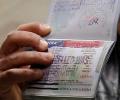
US lawmakers have expressed concerns that policies enacted by the Trump administration, such as the H1B visa fee and tariffs on India, are detrimental to American businesses and threaten the relationship between the United States and India.

The amendment moved by Congressman Dana Rohrabacher on Friday requires the US Defence Secretary to certify that Pakistan is not using its military to "persecute minority groups for their legitimate and nonviolent political and religious beliefs".
A freshman United States lawmaker committed an embarrassing faux pas when during a Congressional hearing he mistook two top Indian-origin American officials as representing the Indian government, quizzing them about "your country" and "your government".
Gary Ackerman, New York Democrat, while acknowledging that he has been one of the strongest critics of President George Bush on his foreign policy, has said however, that in the case of India, Bush had got it "absolutely right."
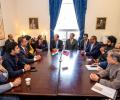
The lawmakers also hailed the strong strategic partnership between India and the US during a meeting with an all-party delegation led by Congress MP Shashi Tharoor, who briefed them on the cross-border terrorism faced by India and the country's strong and resolute stance in the fight against terror.
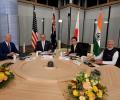
The announcement for the QUAD Caucus came from Congressman Ami Bera, Ranking Member of the House Foreign Affairs Indo-Pacific Subcommittee, Congressman Rob Wittman, and Senators Tammy Duckworth and Pete Ricketts, both members of the Senate Foreign Relations Committee.

The US is making investments in defence ties with India to uphold a favourable balance of power in the Indo-Pacific, a top Pentagon official told lawmakers Thursday indicating that strengthening ties with New Delhi is one of the key factors to address the pacing challenge from China.

"Its time for India to lift these restrictions and afford Kashmiris the same rights and privileges as any other Indian citizen," it said.
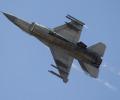
Diplomatic and Congressional sources tell Rediff.com that for all intents and purposes, the F-16 sale is dead.
The subcommittee, a key panel of the House Foreign Affairs Committee, has jurisdiction over United States policy towards all countries in the two regions, including important US allies Israel and India.

An influential US lawmaker claims his visit to India helped catalyze "early signals" that New Delhi may reduce its imports of Russian oil, a step he described as "meaningful" in weakening Moscow's ability to fund its war in Ukraine.
For years, Congressman Brad Sherman, California Democrat, a senior member on the House Foreign Affairs Committee and the ranking Democrat on its Subcommittee on Terrorism has enjoyed the largesse of the Indian American community that has contributed generously to his campaign coffers.

Tired of the alleged "double game" being played by Islamabad, American lawmakers have announced to hold a Congressional hearing next week to discuss whether Pakistan is a "friend or foe" of the US in the war on terror.

"Pakistan must be dissuaded from using terrorism as a state policy, and part of the US engagement with Pakistan should be focused on that result," says Ed Royce, senior Republican lawmaker.
Fair, who is a senior Fellow with the Counterterrorism Centre at West Point, said all of Pakistan's strategic and security threat perceptions have always centered around India and all of the military aid and weapons systems it has received from the US has been to beef up its arsenal vis-a-vis New Delhi.
Influential US lawmaker Congressman Ed Royce has called for the shutting down of the Deobandi schools (madrassas) in Pakistan, which he alleged "continue to churn out terrorists that attack" democratic nations, including India and the United States.
